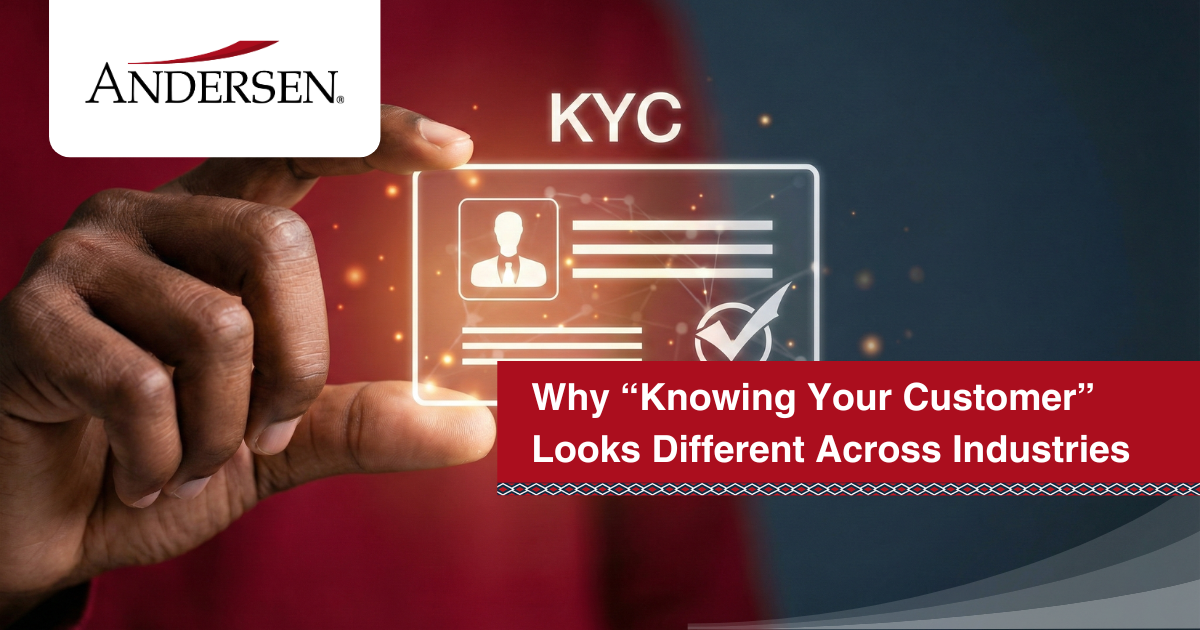
Two businesses can follow the same KYC rules and still face very different risks. Why?
Because customers behave differently across industries.
“Know Your Customer” (KYC) is often viewed as a regulatory checkbox. In reality, it is a practical safeguard that helps businesses protect themselves from financial crime, reputational harm, and regulatory exposure.
But effective KYC is not one-size-fits-all. A risk-based approach recognises that customer behaviour, payment patterns, and business models differ from sector to sector.
Businesses that understand these differences are better positioned to manage risk while maintaining strong and trusted client relationships.
Tourism & Hospitality
Tourism businesses frequently serve short-term or once-off clients, often from multiple jurisdictions, with bookings made online or via third parties.
Real-life scenario:
A lodge receives multiple payments from different individuals for one group booking. While this can be normal for group travel, it can also obscure the identity of the true payer.
What this means for KYC:
Tourism operators benefit from staying alert to unusual payment patterns and applying appropriate identification measures where required, especially for high-value or repeat transactions.
Retail Businesses
Retail operates in a fast-paced, high-volume environment. Individual transactions may appear low risk, but patterns matter.
Risk can arise when:
- Customers repeatedly transact just below reporting thresholds
- Multiple payment methods are used without clear reason
- Purchase behaviour does not align with typical consumer activity
What this means for KYC:
Good record-keeping and staff awareness help identify unusual trends early.
Construction Industry
Construction often involves large project values, milestone payments, and multiple subcontractors, making financial flows more complex.
Real-life scenario:
A contractor receives payment from a company unrelated to the contracted party, described as a “group company arrangement.” Without clarity, this can create AML exposure.
What this means for KYC:
Verifying business legitimacy and maintaining clear payment documentation protects both the company and its projects.
Transport & Logistics
Transport and logistics businesses often handle cross-border transactions and deal with agents or intermediaries.
What this means for KYC:
Extra attention is helpful where payments originate from unrelated parties or higher-risk jurisdictions. Clear documentation and understanding the nature of the client’s business can reduce risk.
Property Owners & Real Estate
Property transactions are globally recognised as higher risk due to their value and potential for misuse.
Common red flags include:
- Complex ownership structures
- Unclear source of funds
- Sudden changes in purchasing entities
What this means for KYC:
Enhanced scrutiny is often necessary to confirm beneficial ownership and source of funds.
KYC as Good Business Practice — Not Just Compliance
At its core, KYC reflects good governance, integrity, and responsible business conduct. It helps organisations:
✔ Protect their reputation
✔ Reduce regulatory risk
✔ Build trusted relationships
✔ Demonstrate sound governance
When applied thoughtfully, KYC supports sustainable business growth rather than limiting it.
A Practical Perspective
Businesses that tailor KYC to their industry are far better protected than those using a generic approach.
Taking the time to understand who you are doing business with is not only a regulatory expectation — it is a hallmark of a responsible and well-run organisation.
With the right guidance, KYC can be integrated smoothly into everyday operations without disrupting client experience.